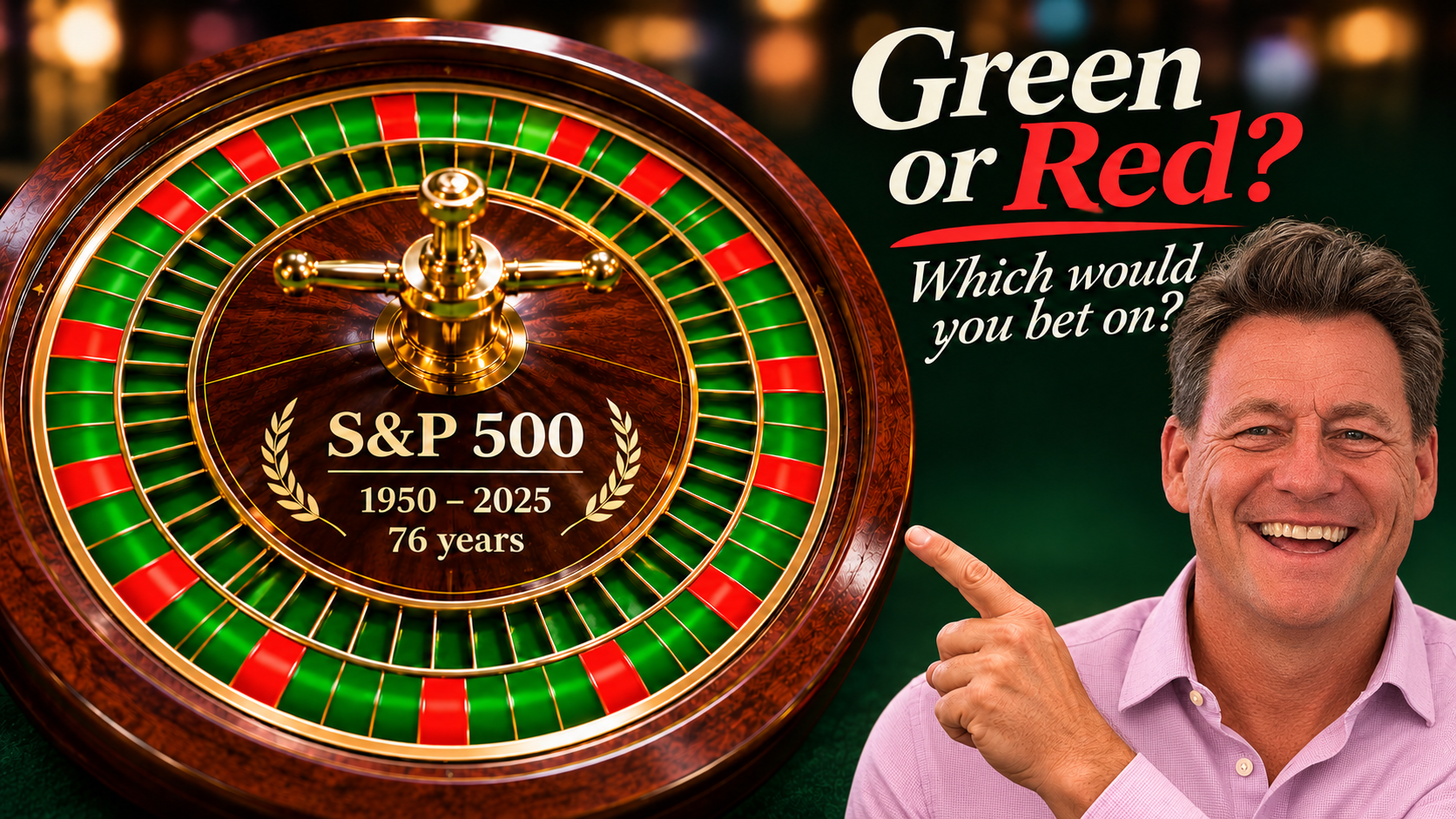
My wife and I just spent a few days in Las Vegas. It was a stopover on our way to Hawaii for her 60th birthday present.
Now I know everyone’s seen images of Vegas but, if you’ve never been, imagine someone took Blackpool, gave it a few billion dollars and told it never to go to bed. The hotels are enormous. The shows are brilliant. And everywhere you turn there’s someone, or something, very keen to relieve you of your hard-earned cash.
Those of you that know my lack of interest in gambling will already know that they didn’t get much of mine.
It’s not that I’m a misery. I enjoy a good night out as much as the next Yorkshireman. It’s just that after more than 35 years in financial planning, my brain won’t let me put money on something when I know the odds are stacked against me. I sit down, look at the numbers, and hear a little voice saying, “Brian, what are you doing, you’ve worked too hard to throw it away?”
Take roulette.
Red or black. Looks like a coin toss. Fifty-fifty right?
No it isn’t.
There’s a little green zero sitting on that wheel, and on American tables a double zero for good measure. That little green pocket is the casino’s profit. It doesn’t look like much. But play long enough and it quietly empties your pockets while the free drinks keep coming.
That’s how they pay for the fountains.
A Wheel I’d Play All Night
Now picture a different wheel.
This one has 76 pockets. Sixty are green. Just sixteen are red. And whichever colour you back, the payout is the same.
I’d pull up a chair and they’d have to send security to shift me.
Nearly an 80% chance of winning on every spin. Could I still lose? Of course. I might lose two or three on the bounce. But with odds like that, I’d keep playing, because I’d know the maths was on my side for once, not the house’s.
Here’s the twist.
That wheel exists. It’s the US stock market.
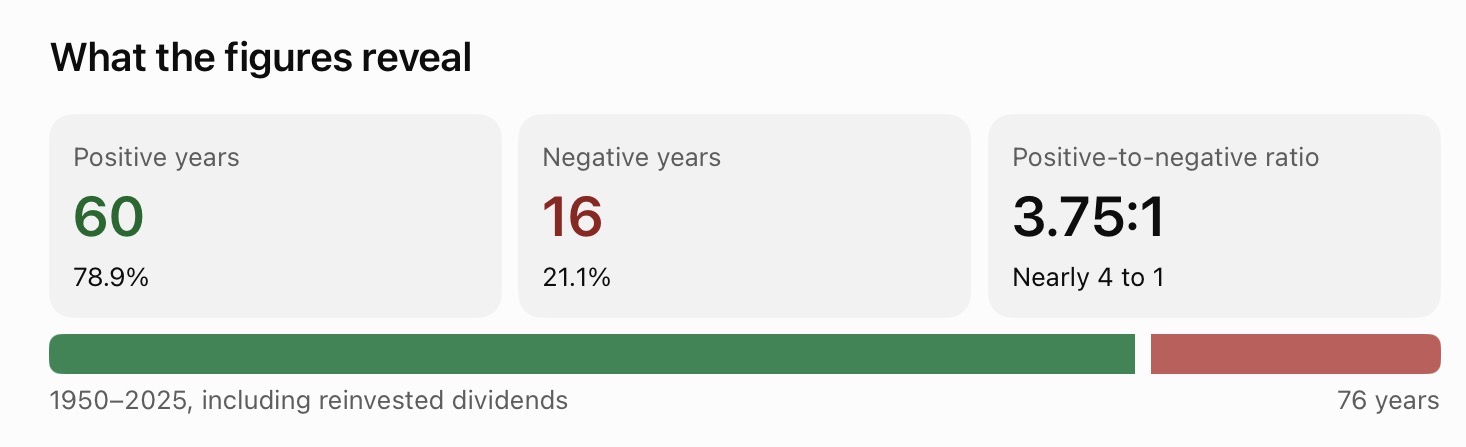
Between 1950 and 2025, 76 full calendar years, the S&P 500 with dividends reinvested finished the year up 60 times and down just 16. That’s a positive year almost 79% of the time. Roughly four good years for every bad one.
Screenshot
And think what those 76 years threw at us. Wars. Recessions. Oil shocks. Seventies inflation that would make your eyes water. The dot-com bust. The 2008 banking crisis. A pandemic that shut the world down. And more “the crash is coming” headlines than I’ve had hot dinners.
The green still comfortably outnumbered the red.
So why do so many sensible people lie awake worrying about the next crash?
Your Brain Isn’t on Your Side Here
It’s not because humans are daft. It’s because we’re human.
Psychologists call it loss aversion. Put simply, losing money hurts a lot more than making the same amount feels good.
If your pension goes up £20,000, you’ll probably smile, mention it over tea, and get on with your day.
If it drops £20,000, it’s a different story. You’re checking it every morning before the kettle’s boiled. You’re watching the news through your fingers. You’re lying in bed at three in the morning wondering whether to sell the lot before it gets any worse.
I understand that feeling. I’ve had many phone calls and review meetings with people feeling exactly that, and there’s nothing foolish about it.
But here’s the problem. When markets fall, every instinct screams at you to get out. Sell. Move to cash. Wait for things to settle down.
And by the time things feel settled, the market has often done a good chunk of its recovering. Without you.
It’s like walking away from that 60-green wheel after a couple of reds. You’ve seen the odds. You know they’re good. But two reds in a row and your nerve goes.
But the House Rules Are Different
Before anybody writes in accusing me of telling people to gamble their pension, I’m not.
There’s one big difference between my imaginary wheel and the real stock market.
On the wheel, you win the same as you lose. Markets don’t work like that. A good year might give you 0.34% like it did in 1960. A bad year might knock 36% off your money, like it did in 2008 )see table below of real returns). A
nd there’s no rule that says next year has to be green just because most years have been.
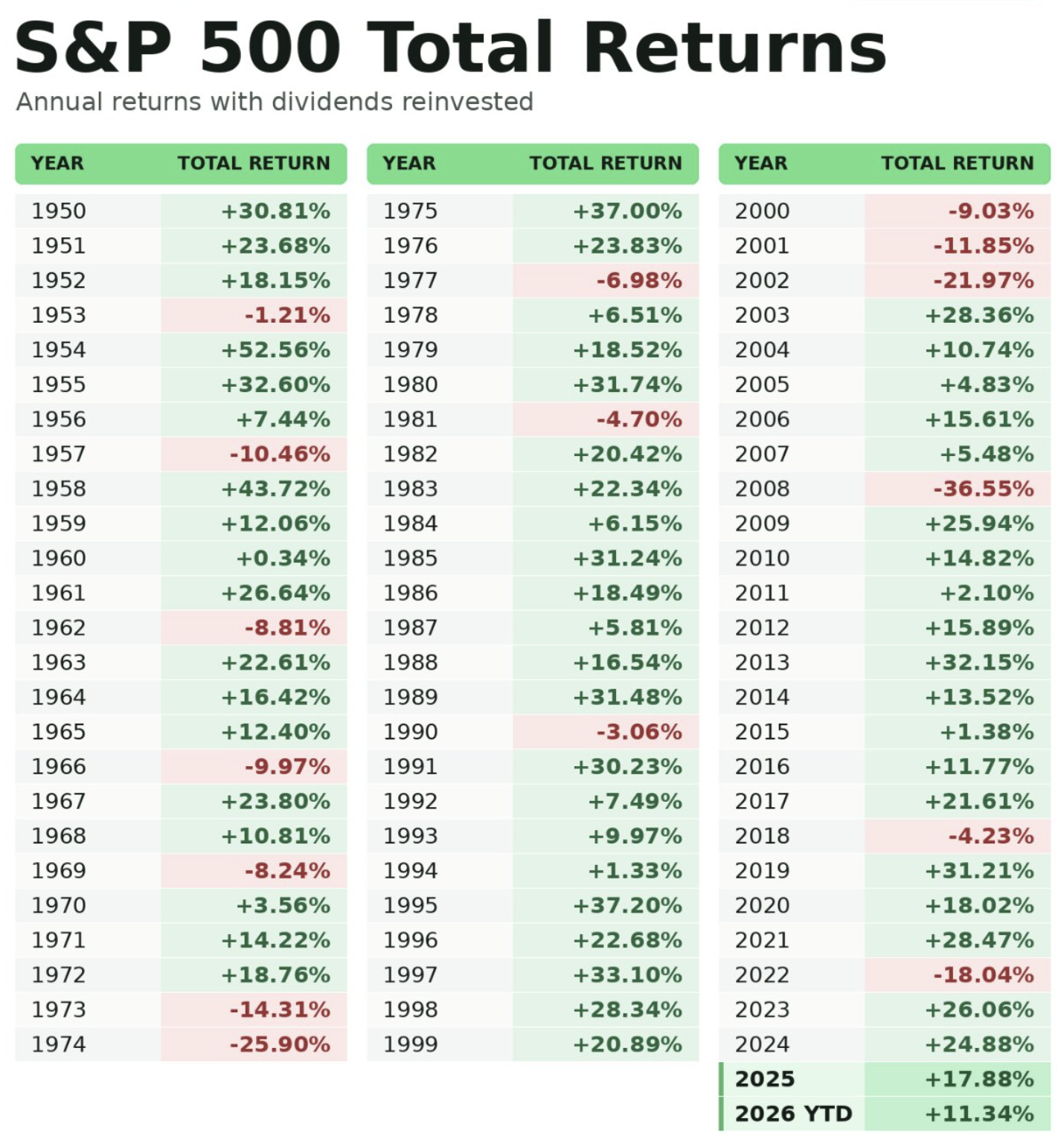
Ask anyone who invested at the start of 2000. They got three red years on the trot: 2000, 2001 and 2002.
So no, investing isn’t risk-free. Not even close.
The lesson is simpler than that. Don’t let the fear of a bad year blind you to seventy-odd years of evidence about what has tended to happen over the long run.
When You’ve Handed In Your Keys
This is where it really matters.
If you’re 35 and retirement is a speck on the horizon, a bad year is a nuisance. You’ve got decades for it to recover, and you’re probably buying more at lower prices along the way.
But picture yourself at 65. You’ve had the leaving do. Handed in your keys and your lanyard. Your investments aren’t just a number on a statement any more. They’re the shopping, the holidays, the grandchildren’s birthday presents. And you’re drawing money out every month.
A red year feels very different then. You may not have the luxury of waiting it out, and selling investments while they’re down to pay the bills can do lasting damage.
That’s why, at Ideal, we spend so much time with clients building lifetime cashflow forecasts. Not because we love spreadsheets, but because they answer the questions that actually matter. How much do you need? When will you need it? And how much risk do you genuinely have to take to get there?
The answer often surprises people. Some discover they don’t need anywhere near as much risk as they thought. They’ve already won the game; they just don’t need to keep playing so hard. Others find they’ve got enough of a cushion to ride out a rough patch without it touching the way they live.
Either way, they stop jumping every time a newsreader says the word “plunge”.
That’s what a proper plan gives you. Not a crystal ball. Peace of mind.
So, Green or Red?
I didn’t spend many evenings at the roulette tables in Vegas. The odds just didn’t appeal.
But if I’d found that wheel, sixty green and sixteen red with equal payouts, my wife would have had to drag me to the airport.
Nobody can tell you whether next year will be green or red. Anybody who says they can is selling something.
You don’t need to predict the red years. You need a plan that means you can cope when one turns up.
Now that’s a bet worth making.
Brian Butcher is an Independent Financial Adviser and retirement planning specialist at Ideal Financial Management Ltd, with over 35 years’ experience.
Important information: Figures are based on the supplied S&P 500 annual total returns chart for 1950–2025, including reinvested dividends. The roulette comparison is illustrative; historical annual returns are not independent, equally probable outcomes, and their magnitudes vary. Past performance is not a reliable indicator of future returns. Investments can fall as well as rise in value, and you may receive back less than you invest.