There’s a quiet financial planning opportunity sitting unnoticed in thousands of pension pots across the UK — and it belongs to women like Sarah.
Sarah is 63. She ran a small part-time business for a decade, quietly squirrelling away contributions into a personal pension along the way. Nothing dramatic — just £200-300 per month was put away in the form of a disciplined monthly contribution.
The result? A pension pot worth just over £45,000 today.
Now, whilst £45,000 is a meaningful sum of money, it won’t go very far in meeting the £31,300 per year that is required to provide a moderate lifestyle (for a single person in retirement)* Fortunately, her husband’s pension covers all their living costs now, their state pensions kick in at 67, and their cash flow shows that neither Sarah nor Tom need a penny of it.
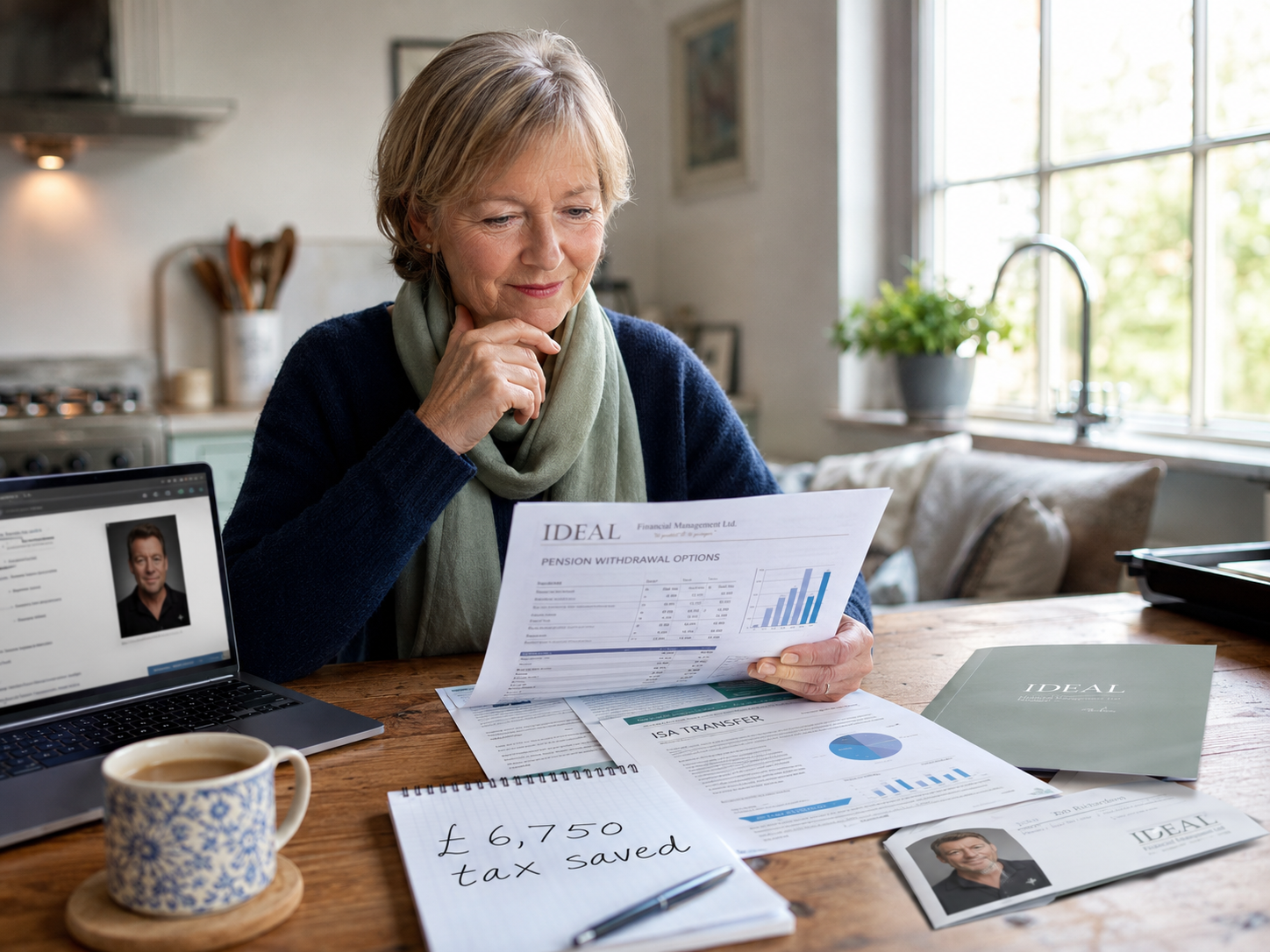
So, on the surface, it looks like a simple case of “leave it alone, let it grow and just take withdrawals when Sarah needs it.” But here’s the thing: that strategy could cost her around £6,750 in unnecessary tax.
The Problem With Waiting
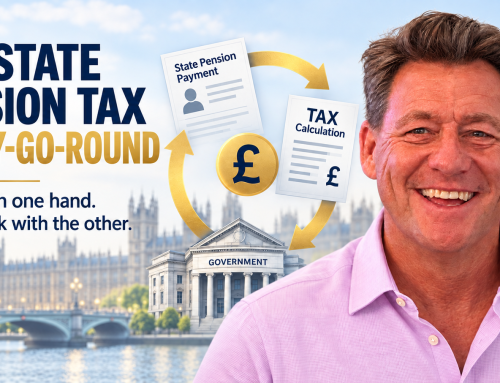
When Sarah reaches state pension age, she’ll receive the full new state pension — currently around £12,500 per year. That alone almost entirely consumes her personal allowance of £12,570 (the personal allowance is the amount you can ‘earn’ before you start to pay tax).
So what happens to her pension pot?
If she leaves it untouched until then and starts drawing it down later, then 25% of the pot will be available tax free (current value £11,250), but then every pound she takes from the taxable part of her pension (the other 75% valued at £33,750)) — will be taxed as income. Her £45,000 pot, which took years to build, becomes significantly less valuable the moment HMRC gets involved.
That’s not a disaster. But it is entirely avoidable.
The Solution: Take It Now, Shelter It Forever
Here’s where it gets interesting.
Right now, at 63, Sarah has a personal allowance sitting there — fully unused, because her husband’s pension covers their joint expenses. She isn’t drawing any taxable income herself.
That means that, based on current tax rules, she can withdraw from her pension completely tax-free, up to certain limits — and then move that money into an ISA, where, under current legislation, it can grow and be withdrawn free of tax, even if her state pension is using up her personal allowance.
Here’s how the numbers work:
| What she withdraws | How much | Tax? |
|---|---|---|
| Taxable pension income | £12,500 | None — within personal allowance |
| 25% tax-free cash (proportionate) | £4,167 | None — tax-free by right |
| Total annual withdrawal | £16,667 | £0 |
By taking roughly £16,667 per year from her pension and immediately placing it into an ISA, Sarah shelters that money from tax. Under the current ISA rules, ISA growth is tax free, ISA withdrawals are tax free and, unlike pensions, ISA withdrawals do not count as income.
Sarah has enough time before the state pension starts to do this for three years – meaning that the entire £45,000 pension pot could potentially be moved into an ISA wrapper — with zero tax paid along the way.
Compare That to Doing Nothing
If Sarah waits until after state pension age, that same £33,750 of taxable pension money is likely to be taxed at 20% as it’s drawn down — a bill of around £6,750, depending on the precise timing and her wider income position at the time.
Same money. Same woman. Very different outcome — simply because of when and how she takes it.
Why This Strategy Works
This approach works because of a beautifully simple intersection of three rules:
- Personal allowance — everyone gets £12,570 of income tax-free each year
- Pension commencement lump sum — 25% of any pension withdrawal is tax-free
- ISA shelter — money placed into an ISA grows and can be withdrawn entirely free of tax.
When these three things work together, a pension that would otherwise generate a tax bill on the way out can be quietly, legally, and completely transformed into a tax-free asset.
Why hasn’t this been recommended to me before?
That’s a fair question to ask – and there is a reason that this strategy has not been shouted about until recently.
For years, pensions enjoyed a remarkable advantage over ISAs when it came to inheritance. Money left unspent inside a pension could pass to your children or grandchildren completely outside of your estate, with no inheritance tax to pay. For someone in Sarah’s position — no immediate need for the money, husband’s income covering all expenses — leaving the pension untouched and passing it on as a tax-efficient legacy genuinely made sense. The “do nothing” strategy had real merit.
That changes in April 2027.
From that date, unspent pension pots will be brought inside the estate for inheritance tax purposes. For many people, that single rule change quietly dismantles the biggest argument for leaving a pension pot alone. The pot that was once a clean, tax-free gift to the next generation suddenly becomes subject to a potential 40% inheritance tax charge on death (assuming the clients net worth is above the IHT exemptions).
For someone like Sarah and her husband, their wealth means the old reason to sit tight and spend this pension last no longer stack up the way it once did.
A Word of Caution
This strategy won’t be right for everyone, and the numbers need to be checked carefully against your individual circumstances. Tax rules change. Personal allowances change. And the interaction between pension withdrawals, state pension, and other income sources can be complex.
Accessing taxable pension income will also trigger the Money Purchase Annual Allowance, which may restrict how much you can pay into pensions in future while still receiving tax relief.
This article is intended as general information only and does not constitute personal financial advice. If you recognise yourself in Sarah’s situation, the smartest next step is a conversation with a qualified financial adviser who can run the numbers specifically for you.
But if you’re a woman in your early-to-mid 60s with a modest pension pot, a husband in work or drawing income, and no immediate need to access your pension — please don’t assume “leave it alone” is always the right answer.
Sometimes, the most expensive thing you can do is nothing at all.
Interested in finding out whether a pension-to-ISA strategy could work for you? Get in touch —I’d love to run the numbers.
*Data provided by the Pensions and Lifetime Savings Association