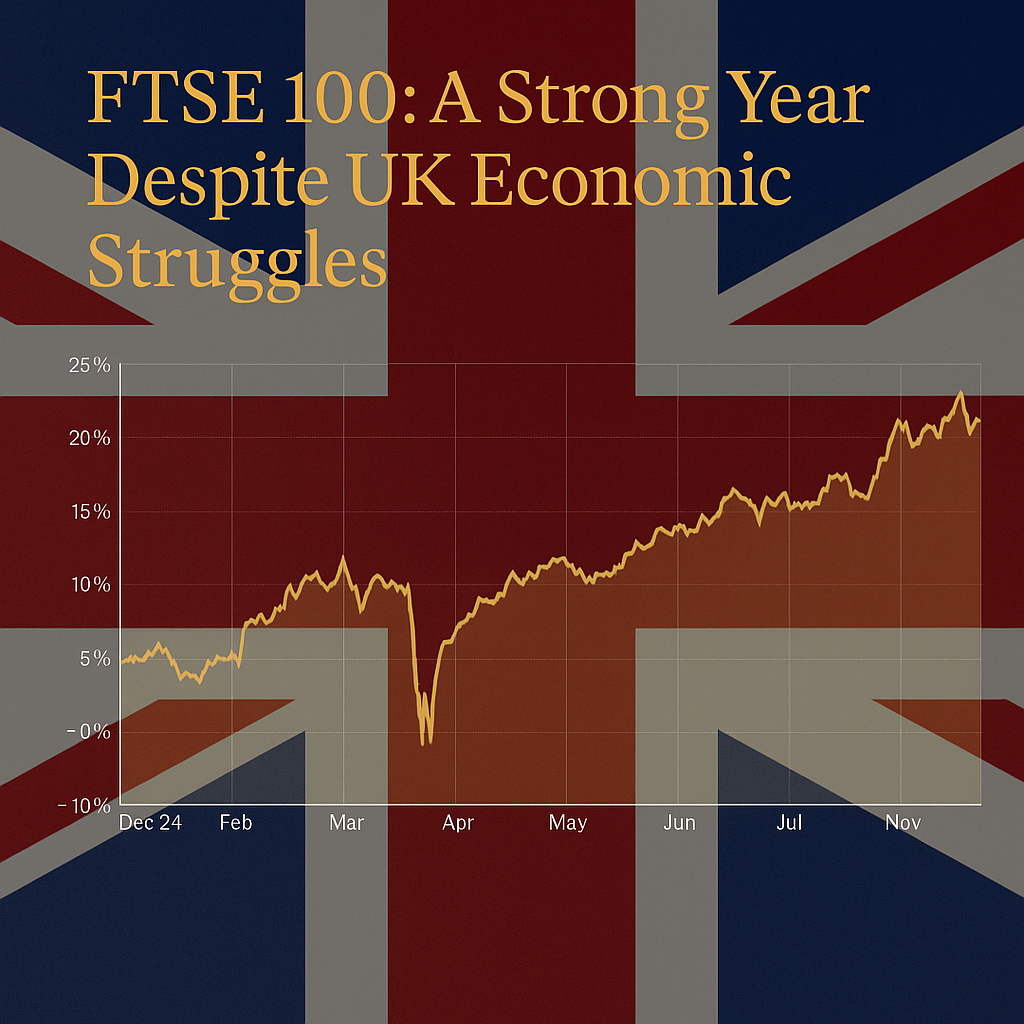
Over the past week, I’ve had several clients contact me with concerns about the markets.
“I’m down £30,000 this month.”
“This war’s not going to end anytime soon.”
“How will this affect my retirement plans?”
If you’ve found yourself thinking something similar, you’re not alone.
As a financial adviser working with clients across Doncaster and the wider UK, this is something I see regularly — particularly during periods of market volatility.
Why Market Falls Feel Worse Than They Are
Believe me, I understand the concern. As a relatively adventurous investor myself, I’ve felt it too — my own portfolio hasn’t escaped the recent falls.
When markets drop 5–10% in a short space of time, it doesn’t feel small. It feels significant. It creates doubt, raises questions, and makes you wonder whether something has fundamentally changed.
But in reality, the biggest challenge we face during times like this is rarely the markets themselves — it’s how we interpret and react to them.
The Real Test of Investing
Most people don’t struggle when markets are rising — and since 2023, they’ve done exactly that.
The real test comes when headlines turn negative, uncertainty creeps in, and short-term performance dips. That is the environment we’re in now.
A relatively small period of volatility can quickly shift us from confidence to concern. Not because the strategy is wrong, but because we’re human.
Behavioural Finance: Why Investors Panic
Understanding investor behaviour is key to making good financial decisions — particularly when markets are uncertain.
Here are three common behavioural biases that come into play:
1. Anchoring – Focusing on the Wrong Number
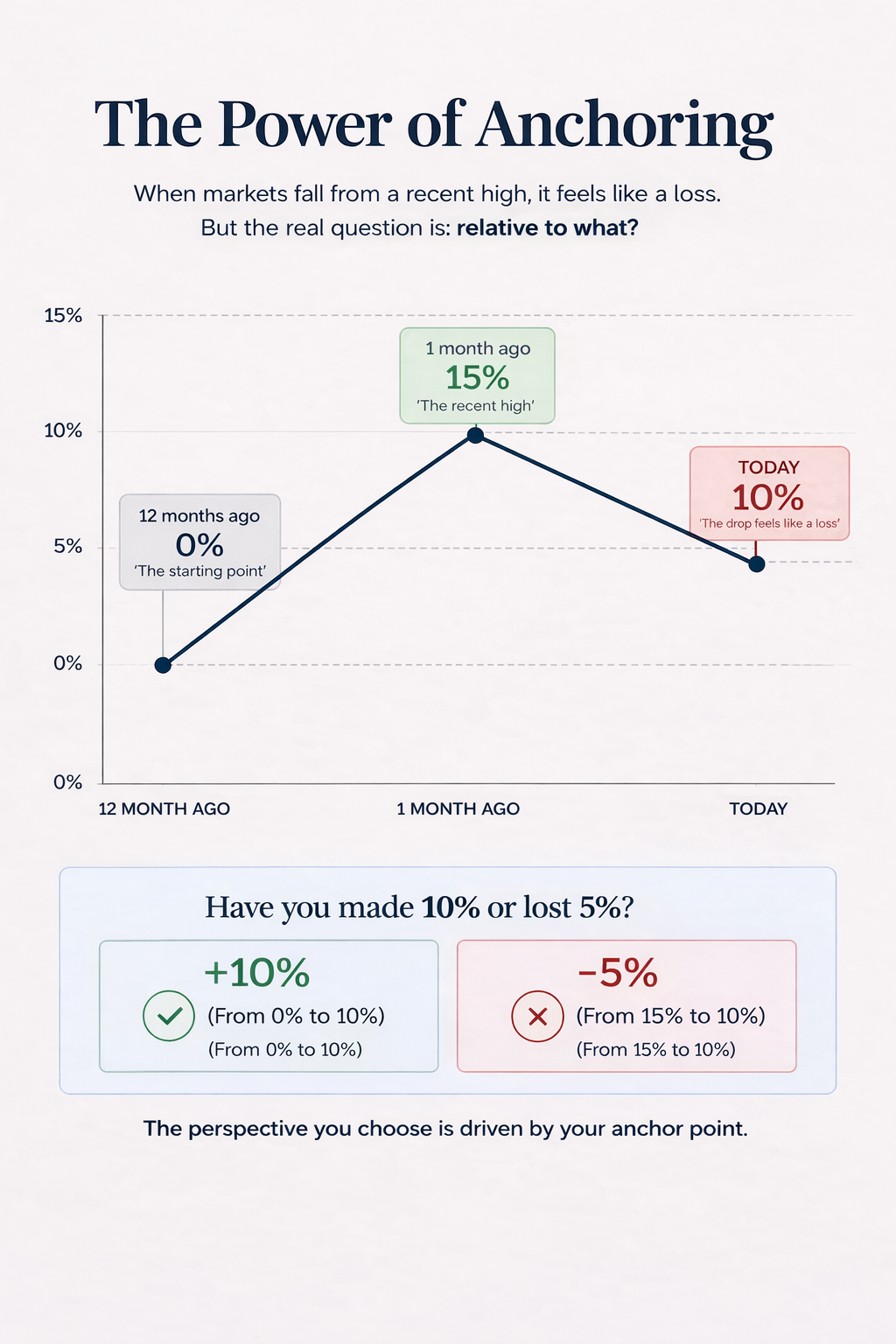
Anchoring is where we fixate on a recent high point in our portfolio and treat it as the benchmark.
So when markets fall back — even slightly — it feels like we’ve lost money, even if we’re still well ahead over the past year.
In reality, nothing fundamental has changed. The investments are the same. The strategy is the same. Only the reference point has shifted.
2. Loss Aversion – Why Losses Feel Worse Than Gains
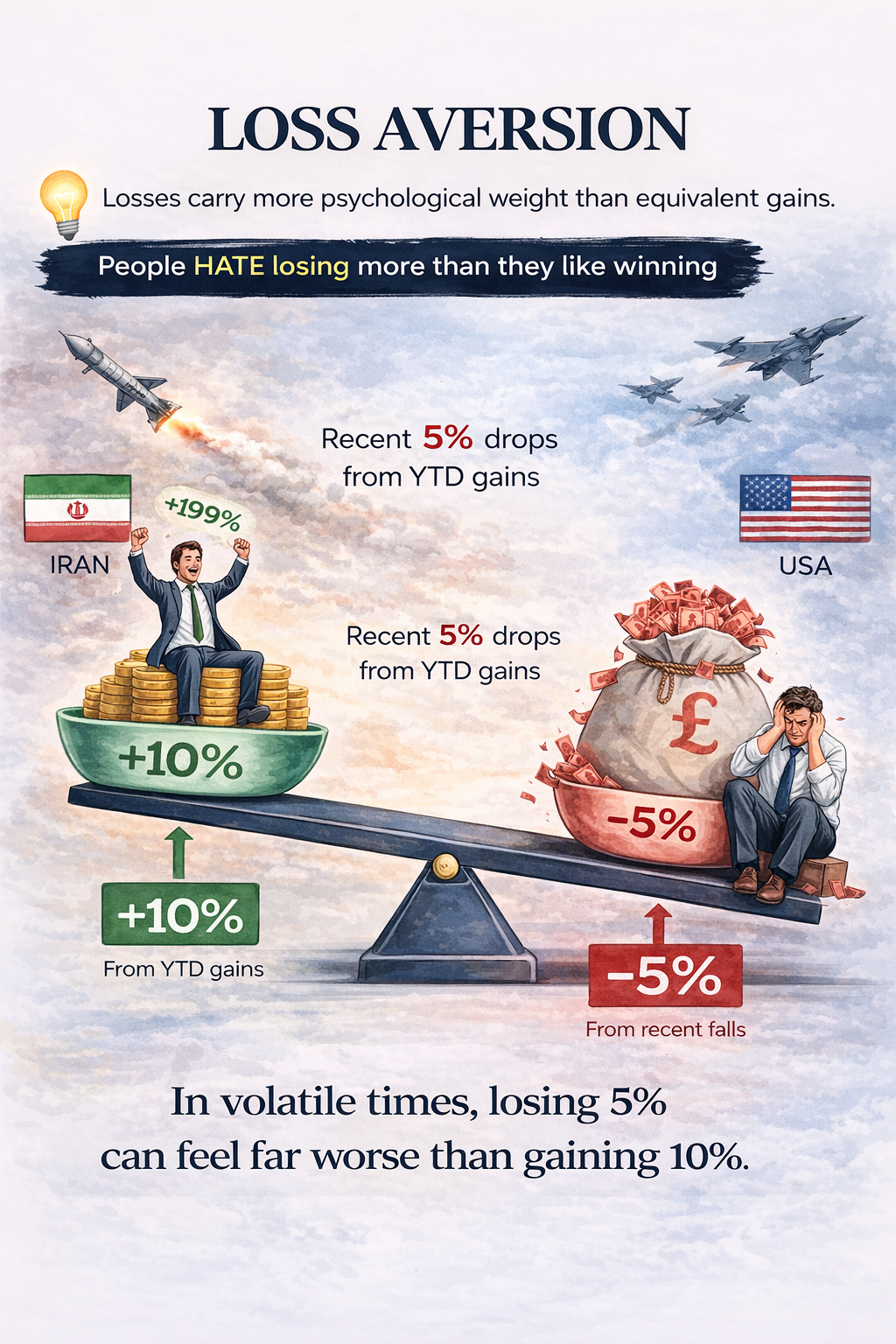
Behavioural finance research shows that losses feel far more painful than gains feel rewarding.
A 5% fall after a 15% rise doesn’t feel like a 10% gain. It feels like something has been taken away.
This emotional response often leads investors to make decisions they later regret.
3. Recency Bias – Overreacting to Recent Events
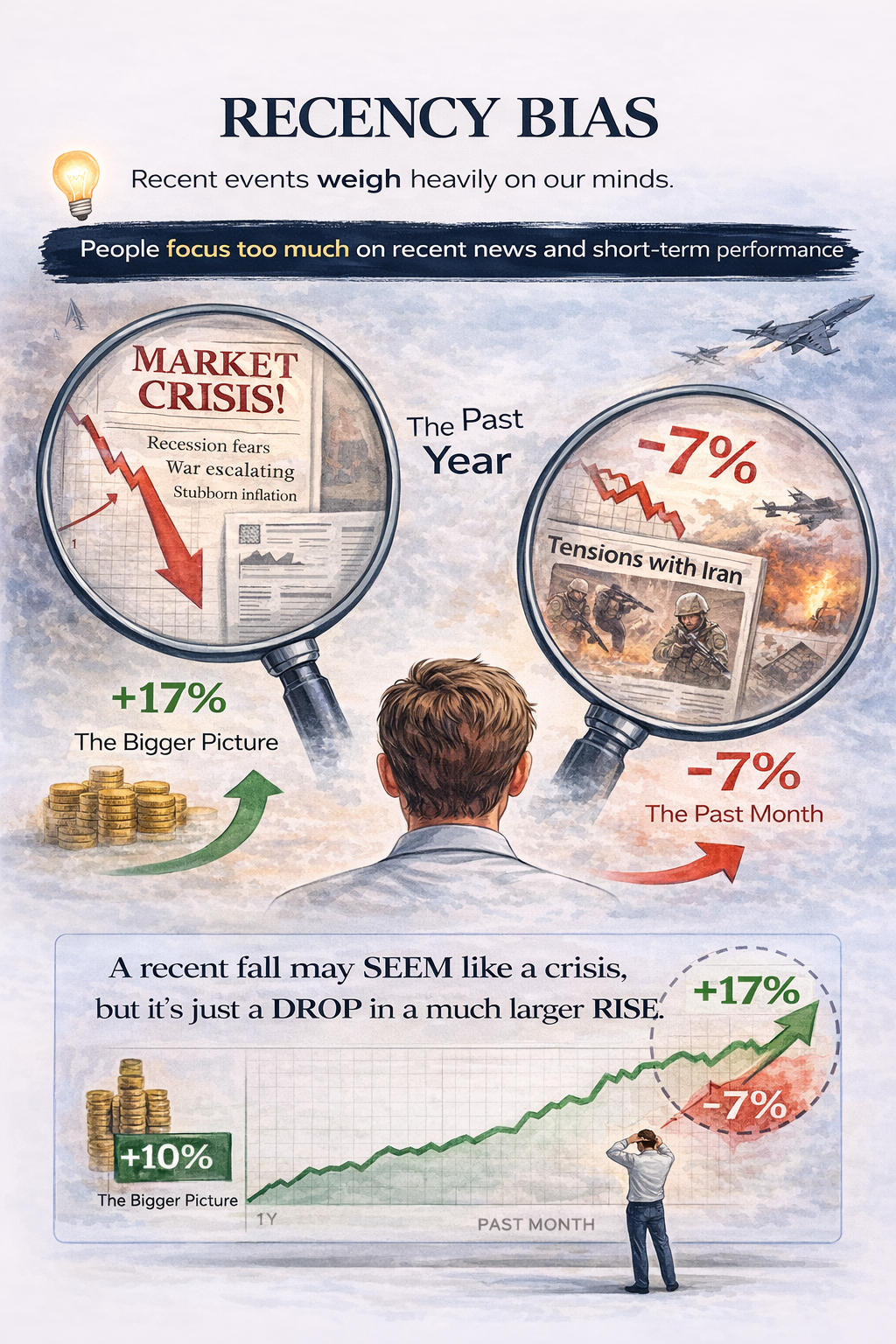
Recency bias causes us to place too much weight on what has just happened.
A short-term market drop can feel like the start of a long-term problem — even though history shows markets move in cycles.
So What Should You Do When Markets Fall?
If you’re wondering what to do with your investments or pension during a market downturn, here are three key principles:
1. Zoom Out
A one-year view can be misleading. Aone-month view tells you nothing.
When you look at markets over longer timeframes, periods of volatility become part of a much bigger upward trend.
2. Revisit Your Long-Term Plan
Your investments are not designed for the next month — they are there to support your retirement, your lifestyle, and your long-term financial goals.
A well-structured pension or investment strategy already accounts for market ups and downs.
3. Stay Disciplined
If your circumstances and objectives haven’t changed, short-term market movements are not a reason to change your strategy.
In fact, periods like this can often create opportunity. When markets fall, future expected returns improve. New investments — particularly at the start of a new tax year that we are about to go into — can be made at more attractive valuations.
It rarely feels like the right time to invest, but historically, those moments have often been the most valuable.
A Final Thought
The biggest risk to long-term investment success is rarely the market itself. It’s the decision to abandon a well-structured strategy at the point where discipline matters most.
About Us
At Ideal Financial Management Ltd, we provide pension advice and investment planning to clients in Doncaster and across the UK.
If you’re concerned about your portfolio, retirement plans, or how current market conditions may affect you, we’re here to help you make clear, confident decisions.
If you’d like a second opinion on your investments or retirement plan, feel free to get in touch.