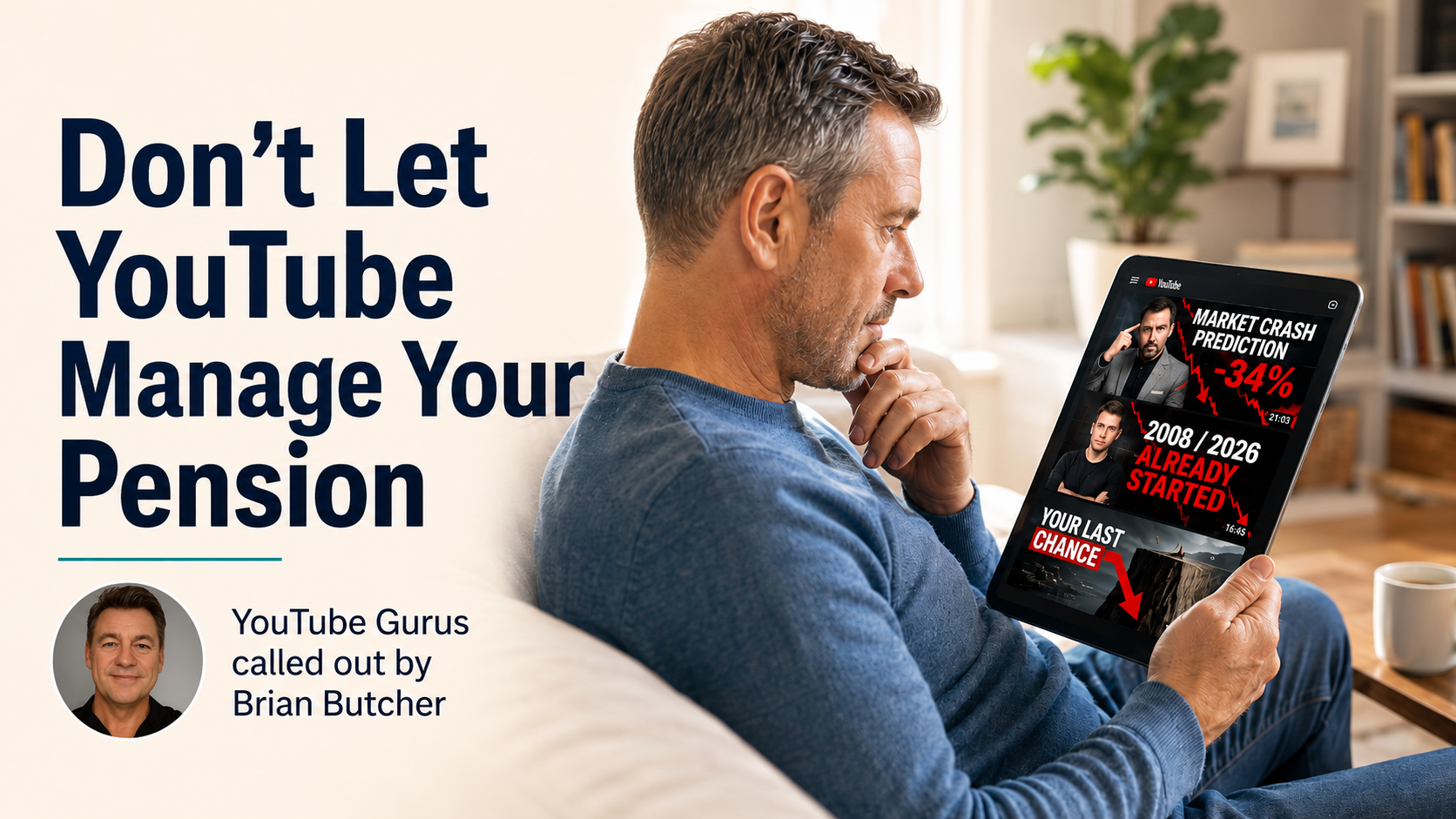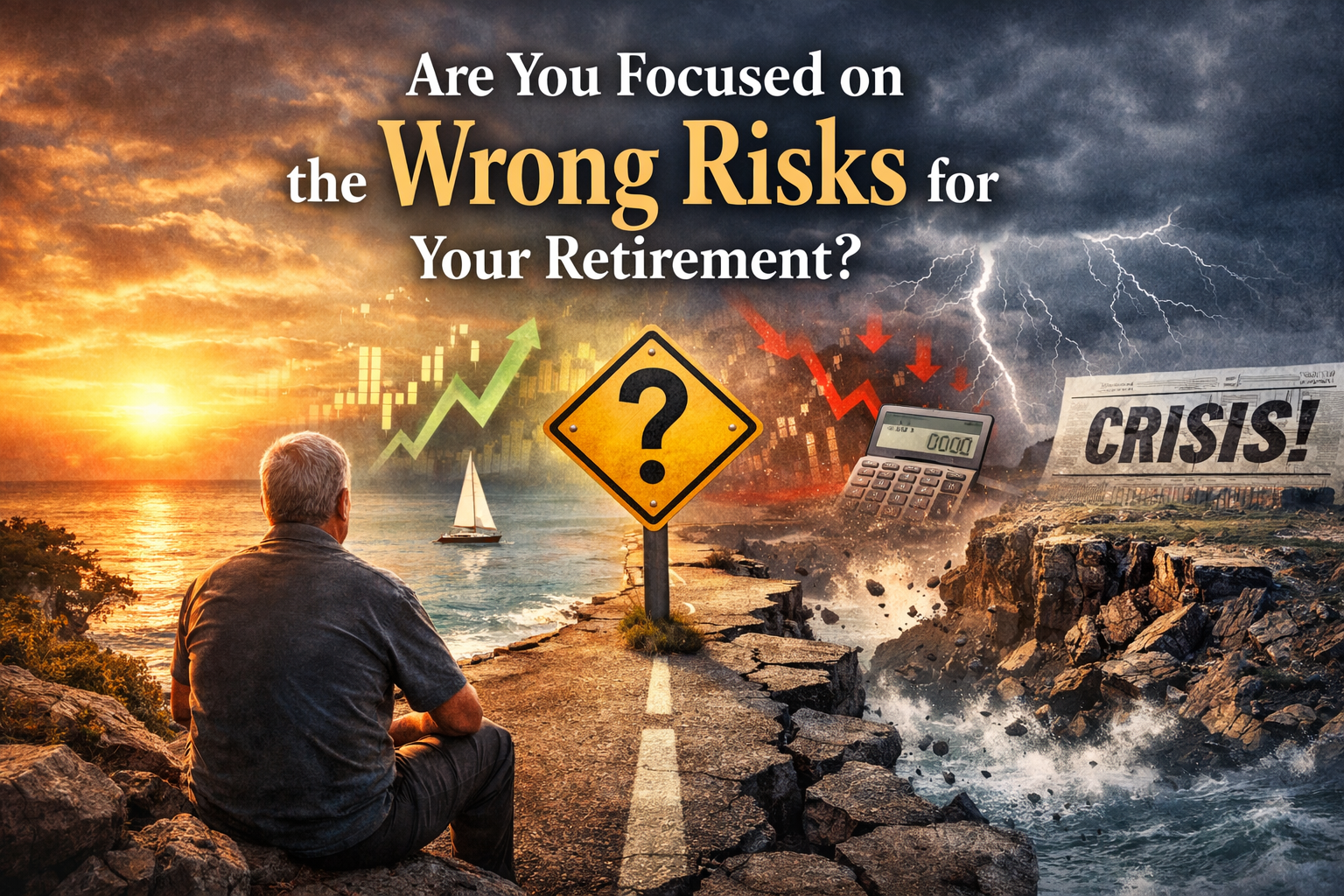
When people begin thinking seriously about retirement planning, one of the first things they worry about is risk.
For many people approaching retirement, particularly those in their fifties or sixties with pensions, investments, or a business behind them, the stakes feel higher than ever. The decisions made in the next few years often shape the rest of life.
Yet most people think about risk in a very one-dimensional way. When the subject comes up, what people are often describing is fear.
Fear of losing money.
Fear of market crashes.
Fear of logging in and seeing a lower number than last time.
That reaction is entirely human. It is also where many otherwise sensible financial plans quietly go off track, because what feels risky and what actually is risky are often very different things.
In the investment world, risk is usually presented as volatility. Markets move up and down, charts wobble, headlines shout, and people are taught to believe that movement itself equals danger. But volatility is really just noise. It is visible, emotional, and uncomfortable, yet on its own it tells us very little about whether your financial future is genuinely under threat.
Real risk tends to be far quieter than that.
The real risk is reaching retirement and discovering that your money cannot support the lifestyle you worked so hard to build.
Inflation is a good example. It rarely makes dramatic headlines, yet it steadily erodes purchasing power year after year. Cash feels safe because the number does not fall, but in real terms it is often shrinking. Over long periods, that silent erosion can do far more damage to a retirement lifestyle than a sharp market fall ever could.
Longevity is another risk that is frequently underestimated. Many retirement plans are built around life expectancy rather than real life. Living well into your late eighties or nineties is now entirely normal. The risk is not living a long life; the risk is running out of money partway through it.
Then there is timing. Markets do not deliver returns in neat, predictable sequences. Drawing income at the wrong time, particularly in the early years of retirement, can put strain on even a well-constructed portfolio. This is why proper retirement planning, cash-flow forecasting, and flexibility matter far more than chasing the highest possible return.
And finally, there is behavioural risk. This is the one that causes the most damage and yet receives the least attention. Reacting emotionally, switching strategies at the wrong moment, or abandoning a plan because the news cycle feels uncomfortable can undo years of sensible decision-making. Most long-term investment failures are not caused by markets; they are caused by people responding badly to markets.
None of us enjoy seeing our money fall in value, even temporarily. That discomfort is perfectly understandable. But designing a plan purely around avoiding short-term unease can create much bigger problems later on. In fact, trying to eliminate all short-term uncertainty often increases long-term risk.
A portfolio that never fluctuates may also never grow enough. A strategy that feels comfortable today can quietly undermine tomorrow. In many cases, accepting some uncertainty along the way is precisely what reduces the risk of future disappointment.
This is why good financial planning starts with your life, not your investments.
A more useful way to think about risk is this: risk is the chance of not being able to live the life you want, when you want it, in the way you expect.
Once you frame it like that, the conversation changes. It becomes less about short-term market movements and more about long-term resilience. Less about performance tables and more about whether your plan can cope with reality. Less about reacting to what is happening today and more about staying on track for what actually matters.
Markets will fall at times, and the headlines that follow will always be dramatic. That is unavoidable. The role of a well-structured financial plan is not to pretend those things will not happen, but to ensure they do not derail your future when they do.
If your decisions are driven mainly by a fear of markets moving, you may be focusing on the wrong risk. The more important question is whether your retirement plan is robust enough to survive uncertainty and still deliver the life you are working towards.
Life changes. Priorities evolve. Tax rules shift. Markets behave in ways no one can predict. A plan that made perfect sense three or five years ago may no longer reflect where you are today or what you now want your money to do.
Thoughtful retirement planning is not about reacting to headlines. It is about building a strategy that is resilient, flexible, and aligned with the life you actually want to live.