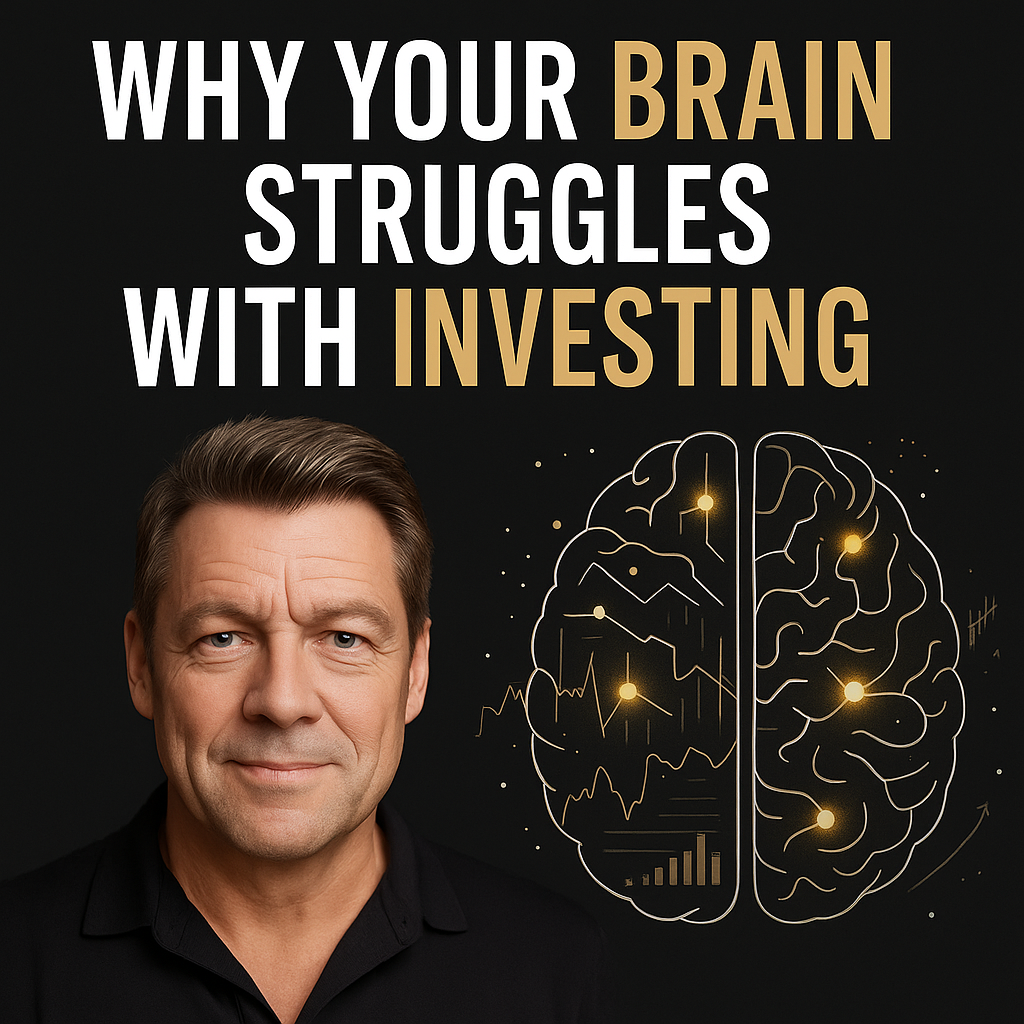
When it comes to money, we’d all like to believe we’re rational. We think we weigh up the facts, think carefully, and make sensible decisions. But the fascinating truth is that our brains are not wired for modern financial life. In fact our neural systems have been working way longer than any stock market or cash flow projection. These instincts that once kept us alive on the savannah now try to protect us from investment losses, market news and long-term uncertainty.
Let me explain – when your pension drops by more than 5% in a bad market, your brain reacts as if you just heard a rustle in the bushes and there might be a predator nearby. You don’t consciously choose to panic. Your nervous system does it for you, automatically and instantly.
There’s a famous study that scanned the brain during financial decisions. When participants anticipated losing money, the parts of the brain that also respond to physical pain lit up. That’s right. Loss doesn’t just feel bad metaphorically. Your brain treats it like injury.
So, if you’ve ever:
• Checked your pension and felt your stomach tighten
• Avoided opening an investment statement because you’re afraid of bad news
• Sold investments during a downturn to feel better
• Chosen cash because it feels “safer” even if it isn’t over the long run
…then you need to read this.
Because you’re not battling the markets. You’re battling your own brain, and your brain is still operating on prehistoric software while trying to manage modern financial decisions.
Loss feels like danger
Your brain is always trying to protect you, but the way it protects you is by pushing you toward short-term safety and away from uncertainty. The problem is that this is usually the opposite of what builds long-term financial success.
Meet your two financial decision-makers
There are two very different systems in your brain making money decisions:
| THE EMOTIONAL BRAIN | THE RATIONAL BRIAN |
|---|---|
| Fast, instinctive, protective | Slow, thoughtful, goal-focused |
| Lives in the “right now” | Plans for the future |
| Panics during volatility | Understands long-term growth |
| Wants comfort and certainty | Accepts risk as part of progress |
Both are useful, but only one is helpful when reading a pension statement.
When the headlines in the media scream “Markets Plunge”, the emotional brain takes over. It doesn’t care about retirement projections or diversified portfolios. It just wants the fear to stop. That’s why people buy high (when markets feel exciting), and sell low (when markets feel scary). The emotional brain chooses comfort today over freedom tomorrow.
Retirement makes this even harder
When income stops, every market wobble feels personal. There’s no “I’ll make it back later” safety net. The brain reads even ordinary volatility as a threat to independence and lifestyle. This is perfectly normal behaviour but its potentially very costly.
So how do you beat biology?
Not by ignoring fear. Not by pretending to be perfectly rational. But by building a structure that keeps the emotional brain calm enough for the rational brain to make decisions.
That includes:
• A plan that anticipates market turbulence rather than fears it
• The right mix of assets for both peace of mind and long-term growth
• A guide who helps you stay steady when uncertainty rises
• Regular conversations that reconnect financial decisions to the life they support
You also need a professional cash flow producing that gives you the key numbers for your retirement. Numbers such as:
How much you can spend before running out of funds?
What rate of return is required to ensure your money doesn’t run out? and
How much you can actually afford to lose in a crash before it affects your plan?
Investing isn’t about being fearless. It’s about not letting fear make the decisions.
Your brain wants to protect you. Our job is to make sure it doesn’t protect you out of a secure, fulfilling retirement.
If this resonates and you’d like help building a plan designed not just for performance, but for human behaviour, send me a message and let’s talk.